Business Brief: The economist who seeks the signal in the noise

Good morning. In a world spinning through crisis after crisis, Baroness Dambisa Moyo has a rare perspective. The bestselling author sits in the British House of Lords, serves on boards of global giants such as Chevron, Condé Nast and the National Geographic Society, and has built a career studying what happens when big systems come under pressure. Her message? Don’t panic. Our full conversation is below.
In the news
Retail: 7-Eleven’s parent company says Couche-Tard is understating the antitrust risks of a potential merger.
Finance: Alternative banking pioneer Som Seif’s Purpose is acquiring Steadyhand, adding $1.3-billion in assets.
Media: Blue Ant Media Inc. has reached a deal to go public via a reverse takeover of Boat Rocker Media.
Energy: Tracking one company’s efforts to solve Alberta’s oil and gas liability problem.
On our radar
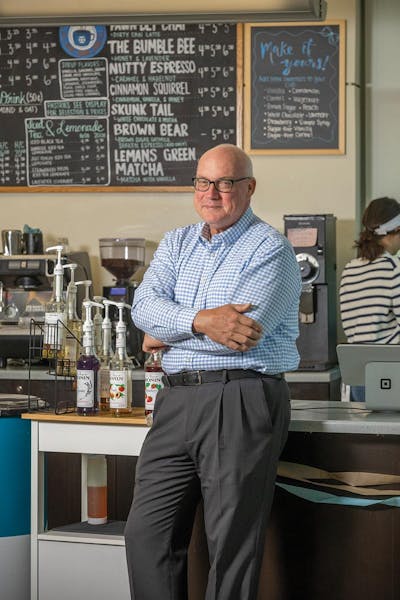
Baroness Dambisa Moyo is a world-renowned economist and member of Britain’s House of Lords.KRYSTIAN DATA/Supplied
In focus
‘There’s a risk of being too negative’
Baroness Dambisa Moyo has spent her career on the front lines of global volatility. A Zambian-born economist and strategist, she serves on a number of corporate boards – and as a member of the British House of Lords, she routinely debates questions of economic resilience, international trade and the future of artificial intelligence.
Wielding a PhD in economics from Oxford and a master’s in public administration from Harvard, Moyo has become a leading voice in global affairs – earning a spot on Time magazine’s list of the world’s 100 most influential people.
Today, after guiding politicians and business leaders through the 2008-09 recession and the COVID-19 pandemic, Moyo is watching a new kind of instability take shape – not just another cycle of volatility, but something deeper.
“The geopolitical environment has materially changed,” she said in an interview yesterday, hours before Trump appeared to have again recalibrated his plan to impose tariffs on global trade allies. Beyond the White House, the connective tissue of the economy is fraying – more fragmentation, more volatility, and fewer of the shared assumptions that once held the world together.
From energy and AI to trade and public health, the systems we once relied on are shifting all at once – creating a sense of dislocation that’s hard for economists to model. “We are in the business of understanding how to navigate uncertainty,” Moyo said. “And it’s constantly the tension between noise and signal.”
To Moyo, today’s world looks less like the stable era of globalization and multilateral cooperation that defined the postwar period from 1950 to 2008 – and more like a shadow of the early 20th century, when protectionism pushed the world toward disaster. “Smoot-Hawley was very dissimilar to that stable period,” she said, referring to the U.S. tariff act in 1930 that plunged the global economy deeper into the Great Depression. “But it’s much more similar to where we are today.”
The age of ‘polycrisis’
Economists are increasingly using the term “polycrisis” to describe this dynamic: not just multiple crises, but overlapping ones that intensify each other. “We’re also in the early innings of major super cycles: AI, the energy transition,” Moyo said. “These broader transformations are creating more noise, more complexity.”
Those concerns were brought into sharp relief last week, when the OECD warned that ballooning debt levels and rising interest costs are straining governments’ ability to respond to the next crisis. The Paris-based group said public and corporate borrowing surged past US$100-trillion last year – with debt service costs in OECD countries climbing to their highest share of national income since 2007. That means less fiscal room for the kinds of big, co-ordinated responses seen in 2008 and 2020.
And for all the talk of policy and planning, markets often deliver the sharpest reminders of how fast things can go sideways. A flash crash in 2010, an algorithm-fuelled sell-off last August – sudden shocks that sent prices tumbling before anyone had a chance to figure out what was happening.
Across her portfolios, “we are constantly trying to ensure that we have processes and resilience in organizations to deal with these uncertainties,” Moyo said. “That is the job of corporate boards, that is the job of political leaders.”
How to navigate the noise
Taken together – political realignment, technological acceleration and climate instability – the disruptions present a fundamental challenge to how organizations plan and operate, Moyo said. “How do you finance yourself in this climate? How do you staff and supply? What’s your hiring model? How do you build in resilience?” she said. “These are the questions every board should be asking.”
If it wasn’t clear enough already, the baroness speaks from experience. In addition to her current roles, Moyo previously served on the boards of Barclays, Seagate Technology and Toronto-based Barrick Gold from 2011 to 2018. She co-leads Versaca Investments, a global firm with more than US$1-billion in assets under management.
“We are constantly upgrading and testing – not just the models and the data as inputs, but also the types of people that are helping us think through how to mitigate these challenges.”
Despite these profound challenges, Moyo sees equally promising opportunities. Take AI, which could deliver massive economic growth. “The forecasts are that AI could add up to US$17-trillion of new GDP by 2030,” she said. “That would fundamentally shift the narrative away from today’s low-growth era.”
‘Events, dear boy, events.’
It’s on this point that Moyo offers a radical idea: Let’s take a deep breath.
“There’s a risk of being too negative,” she said. “Of rushing to the side of the boat where it’s all awful, and it’s all going to end in misery.”
She recalled the remarks of former British prime minister Harold Macmillan: “Events, dear boy, events.” Surprises are not exceptions in public life or global markets, she said. They’re constants.
“This is the work – not just for businesses, but for leaders in any sphere: We are in the business of understanding how to navigate uncertainty.”
Political leaders today are navigating that uncertainty along different paths. In Britain, Prime Minister Keir Starmer is reinforcing deeper ties with the U.S., while French President Emmanuel Macron and incoming German Chancellor Friedrich Merz advocate greater European independence – further testing the resilience of long-standing partnerships.
Political leaders, like corporate ones, are navigating the same pressures: uncertainty, volatility and structural change. “I look at these questions purely from the perspective of being an economist,” Moyo said. “But the job is still the same: Focus on what you can control, and make sure you’re ready for change.”
Moyo’s books have tackled many of these themes: how structural forces shape macroeconomic stability; how capital flows intersect with politics; and how institutions respond when global assumptions shift. Years of research that has instilled in her a scepticism toward the idea that today’s challenges are unnavigable.
“We’ve had pandemics before. We’ve had wars. We’ve had financial crashes,” she said. “From the adoption of new technologies to shifts in the global order, this is not uncharted territory.”
She doesn’t discount the severity of the moment but resists the temptation to see it as terminal.
“I just have a little more humility about where I am in the grand story of humanity,” she said. “I don’t believe I’m in the generation where the world ceases to exist. But I could be wrong.”
Charted
The rise and fall of political fortunes
The Conservatives were running away in the polls. But the federal election has become a horserace, Nik Nanos writes.
Bookmarked
On our reading list
In court: How Ben & Jerry’s social activism clashes with its owner serves as a cautionary tale for corporate leaders in a highly charged environment.
At work: ‘Cheated’ out of an office retirement party, new retirees can’t find closure.
At the top: What business leaders can learn from Connor McDavid.
Morning update
Global markets were mixed in cautious trading as investors weighed the prospect of narrower-than-feared U.S. tariffs. Wall Street futures were little changed after markets closed sharply higher yesterday, while TSX futures were in positive territory.
Overseas, the pan-European STOXX 600 was up 0.81 per cent in morning trading. Britain’s FTSE 100 rose 0.73 per cent, Germany’s DAX gained 0.99 per cent and France’s CAC 40 advanced 1.18 per cent.
In Asia, Japan’s Nikkei closed 0.46 per cent higher, while Hong Kong’s Hang Seng dropped 2.35 per cent.
The Canadian dollar traded at 69.97 U.S. cents.
link